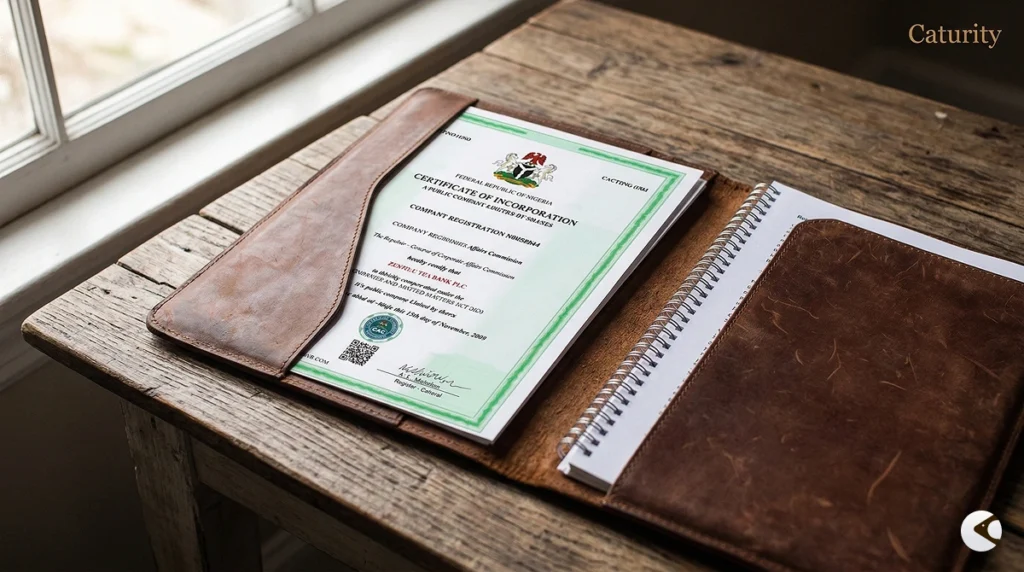
There is a folder on Pastor Emeka Nwosu’s desk in Umuahia.
It is stuffed with seven years of work: CAC registration certificates, annual reports in spiral binding, photographs of the rural health clinics his team built in Isuikwuato, a letter of commendation from the Abia State Ministry of Health dated March 2021. The folder is three inches thick.
When the Bank CSR team conducted its annual partner shortlist last September, Hope Health Initiative was not on it.
Not because the work wasn’t real. Not because the need wasn’t there. Because the shortlist was built from Google searches, WhatsApp referrals, and names that had appeared at a Lagos conference two years earlier.
Pastor Emeka wasn’t in any of those places.
His folder was.
What the Gap Actually Looks Like
Development funding in South East Nigeria follows a pattern that everyone in the sector recognises and almost no one talks about plainly.
Money moves toward visibility. Visibility concentrates in cities. Cities already have organisations. Rural LGAs (Ohafia, Isuikwuato, Arochukwu, Bende) do the work that goes unfunded.
This is not a conspiracy. It is a coordination failure. The CSR manager in Aba has ₦20M to allocate and six weeks to allocate it. She is not malicious. She is deadline-constrained. She finds who she can find, verifies who she can verify, and closes the cycle before her MD asks for the report.
The problem is not that she ignores rural NGOs. The problem is that she cannot see them.
In Abia State alone, there are hundreds of civil society organisations operating at the LGA level: health, education, WASH, livelihoods. Most of them are unregistered on any searchable platform. Most of them have never appeared in a funding shortlist. Most of them have done years of documented work with no mechanism to prove it to the people holding the cheques.
The folder on Pastor Emeka’s desk exists in every LGA in the South East.
The Invisible Sector Has Three Layers
There are three categories of actors doing real development work that no funder can currently find.
The first is the community NGO: registered, documented, operating, invisible online.
The second is the family foundation. They exist in most sizeable communities across Abia, Imo, Anambra, Enugu, and Ebonyi. A businessman from Arochukwu sets one up, funds scholarships for secondary school leavers in his hometown, runs it from a personal account, and files nothing centrally. The work is genuine. The accountability trail is thin. When a diaspora association in Toronto wants to co-fund education in that community, there is no way to verify whether the foundation is active, how many students it has reached, or whether last year’s cohort actually received their awards.
The third layer is the one growing fastest. Every week, Nigerians in Lagos, Abuja, and across the diaspora post GoFundMe links, Paystack fundraiser pages, and Instagram appeals for medical bills, school fees, flood damage, and community projects. Some of these campaigns are coordinated by legitimate NGOs. Most are not. Almost none of them connect to any development plan, any verified organisation, or any gap analysis of what the community actually needs.
The money moves. The coordination does not.
A widow in Ohafia raises ₦480,000 on social media to rebuild a borehole destroyed in the 2022 flooding. Three months later, a diaspora association in Houston sends another ₦600,000 to fund a borehole in the same community because no one told them the first one was already fixed. In the same LGA, Umunneochi has had no functioning water point for 14 months and received no funding at all.
This is what uncoordinated giving looks like on the ground.
Why This Matters for the Development Plan
The South East Development Commission was established, in part, to address the structural underfunding that followed decades of post-conflict marginalisation. State development plans (from Abia to Enugu to Anambra) now explicitly name civil society as an implementation partner for health, education, and livelihood programmes.
The logic is sound. Government cannot reach the last mile. Corporations have resources but need verified local presence. Diaspora communities (the Abia USA Alumni Association, the Anambra UK Association, the Igbo Diaspora Foundation) direct hundreds of millions of naira annually toward community development, with no reliable way to know whether the organisations they fund are real, whether the need they are addressing already has coverage, or whether a parallel effort started three months earlier.
NGOs, CSOs, and family foundations are the connective tissue between funding and people.
But connective tissue that cannot be found does not connect anything.
The South East development plan, in every iteration, assumes a functioning civil society sector. It assumes organisations can be identified, vetted, and engaged. It assumes that when a foundation wants to fund maternal health in Bende LGA, there is a mechanism to find the right partner.
There is no such mechanism.
There is a Google search. There is a WhatsApp group. There is a conference where the same 14 organisations in Lagos and Enugu present every year.
The Cost of Invisibility
The cost is specific. It is not abstract.
₦20M in annual CSR funding, spent on the same 3 urban NGOs for 5 consecutive years. Not because those organisations are best placed to serve rural communities. Because they are findable.
A foundation program officer spending ₦2M a year on landscape consultants to produce reports that are already 9 months old by the time they reach the board. Not because the data doesn’t exist in the field. Because no one has aggregated it.
A diaspora association president in Houston sending $45,000 to a health initiative in Ohafia after a 4-month vetting process conducted entirely by WhatsApp and prayer.
A family foundation in Aba that has funded 60 scholarships over 8 years and has no online presence, no registry entry, and no way for a co-funder to know it exists.
A rural clinic in Arochukwu run by an NGO that has operated for 11 years, never received formal external funding, and does not appear in any registry that a funder would search.
That clinic is real. The patients are real. The gap is real.
The problem is the folder.
What Participation Actually Requires
Here is the uncomfortable truth the sector has avoided for years: most civil society organisations in South East Nigeria are invisible not because they lack impact, but because visibility requires infrastructure they cannot afford.
A website costs ₦150,000 to build and ₦60,000 a year to maintain. An SEO-visible organisation requires someone who understands digital presence, a skill set that most community-based NGOs do not have on their ₦8M annual budget. Conference presence requires travel, accommodation, and registration fees: costs that consume the same budget meant for programmes.
The organisations closest to the communities with the deepest need are the ones with the least capacity to signal that they exist.
This is not a funding problem. It is a visibility problem. And visibility problems have infrastructure solutions.
A verified registry, searchable by LGA and sector, changes who gets found in the next CSR shortlist cycle. Not by changing the CSR manager’s intentions. By changing what appears when she opens her laptop.
A verification tier system (one that a small NGO can enter for free and upgrade through documented evidence) changes who gets taken seriously in the next grant conversation. Not by changing the foundation’s due diligence standards. By giving small organisations a standardised way to meet them.
A gap analysis layer on top of that registry changes what the Abia diaspora association in Houston funds next cycle. Not by changing their priorities. By showing them, in real time, which LGA has need without coverage, and which one already has three programmes running.
A coordination layer on top of social media fundraising channels means the next borehole campaign gets routed to where the gap actually is, not where the last viral post happened to point.
None of this requires new money. It requires new visibility.
The Question This Piece Cannot Answer
Caturity is building this infrastructure. We are a verified registry and development coordination platform. We describe what we are doing, without embarrassment, as Zillow for impact.
We are starting in South East Nigeria. We are building the map, the registry, the verification tiers, the gap analysis layer. We are seeding it with real organisations: NGOs, CSOs, and family foundations. We are giving Pastor Emeka a way to put his folder on the internet where Chioma from Bank’s CSR can find it. We are building the layer that tells the Houston diaspora association that the borehole in Ohafia already got funded last month.
This is not a solution to the South East development gap. That requires money, policy, sustained political will, and time.
This is a solution to the visibility problem. Which is a real problem. Which costs real money every year it remains unsolved.
What we cannot answer is whether the organisations that get visible will also get funded. Whether the CSR manager, once she can see rural NGOs, will choose them over the familiar names. Whether the foundation, once it can map the gap, will reorient its allocations toward it. Whether the diaspora fundraiser, once pointed at verified data, will coordinate rather than duplicate.
That requires a different kind of choice. Human. Political. Institutional.
Right now, somewhere in Bende LGA, there is a woman running a maternal health programme that has served 400 families in the past 18 months. She has records. She has photographs. She has a register of every woman who came through.
She has no profile anywhere that a funder would look.
She is the point of this platform.
Whether she is also the point of the South East development plan is the question that belongs to the people holding the cheques.
Caturity is a verified registry and intelligence platform for development coordination across Africa. Phase 1 is live in Nigeria. Organisations can register free at caturity.com.